
Outboard Motors, Maintenance, Marine Hardware
Outboard Shaft Length: Short vs. Long, and How to Measure Your Transom
Oct
Table of Contents
Matching your outboard motor’s shaft length to your boat’s transom height is one of the most critical decisions you’ll make when repowering or outfitting a boat. An engine mounted too high draws in air instead of water, leading to overheating and prop cavitation; an engine mounted too low adds drag, sluggish steering, and severe splashback over the stern.
The right shaft length puts the motor’s anti-ventilation plate (the flat metal fin right above the propeller) flush with, or slightly below, the lowest point of your boat’s hull.
Outboard Shaft Length Chart: Standard Sizes Explained
Outboard engine manufacturers build shafts to standardized vertical dimensions. When shopping for an outboard motor, you will typically see models split into four main size tiers.
| Shaft Designation | Transom Height Range (Inches) | Transom Height Range (Millimeters) | Common Vessel / Engine Applications |
| Short Shaft (S) | 15″ | 381 mm | Inflatables, Jon boats, small aluminum tenders (under 10 HP) |
| Long Shaft (L) | 20″ | 508 mm | Fiberglass skiffs, deep-V fishing boats, sailboat brackets |
| Extra-Long Shaft (X / XL) | 25″ | 635 mm | Mid-to-large offshore hulls, pontoon boats, bay boats |
| Ultra-Long Shaft (XX / XXL) | 30″ | 762 mm | Large multi-engine offshore center consoles, high-transom cats |
Note: Minor manufacturer variances exist, but standard bracket adjustment holes give you roughly 1 to 2 inches of vertical mounting tolerance.
How to Measure Your Boat Transom Correctly
Measuring your boat’s transom takes under two minutes with a tape measure, but a common mistake leads many boaters to order the wrong size engine.
Step 1: Position the Boat Level
Ensure the boat is level on its trailer or jack stands so you get a true vertical drop.
Step 2: Locate the Measurement Points
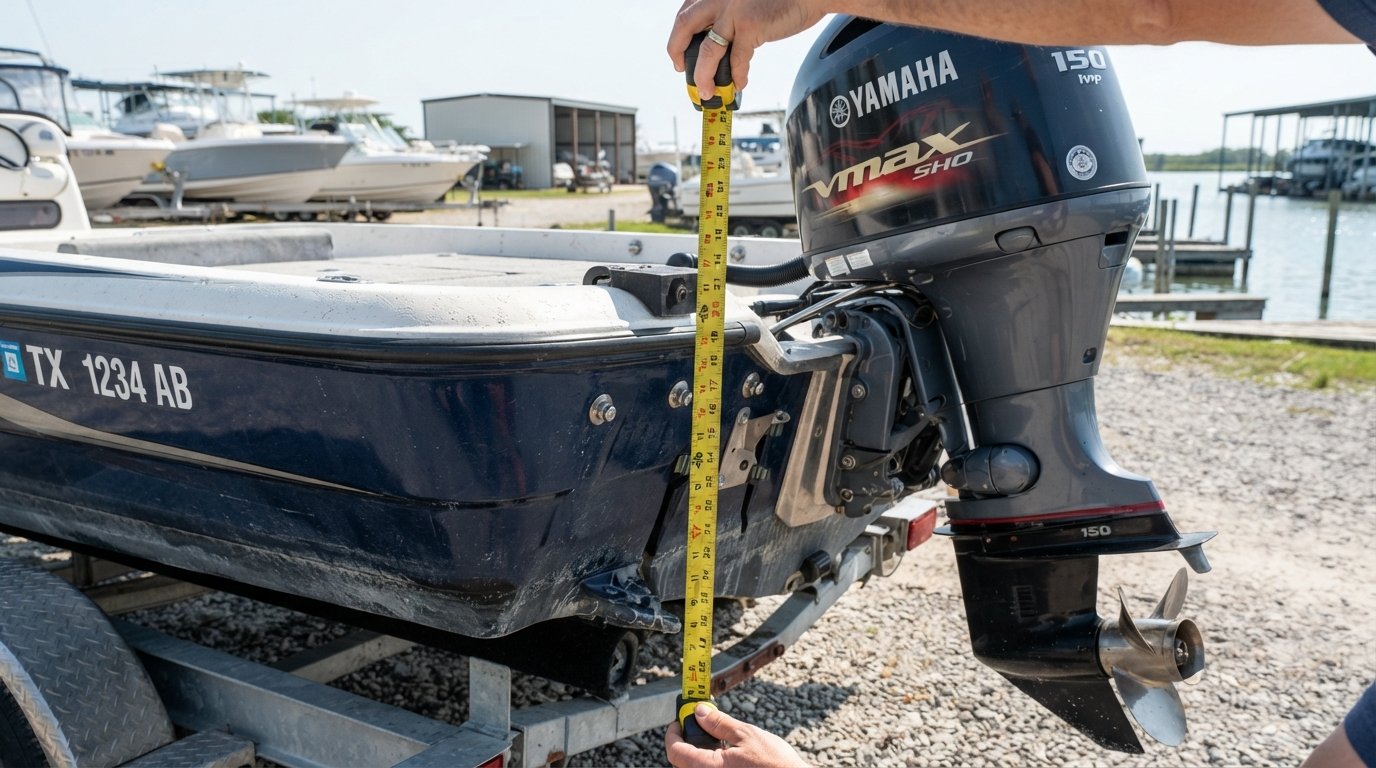
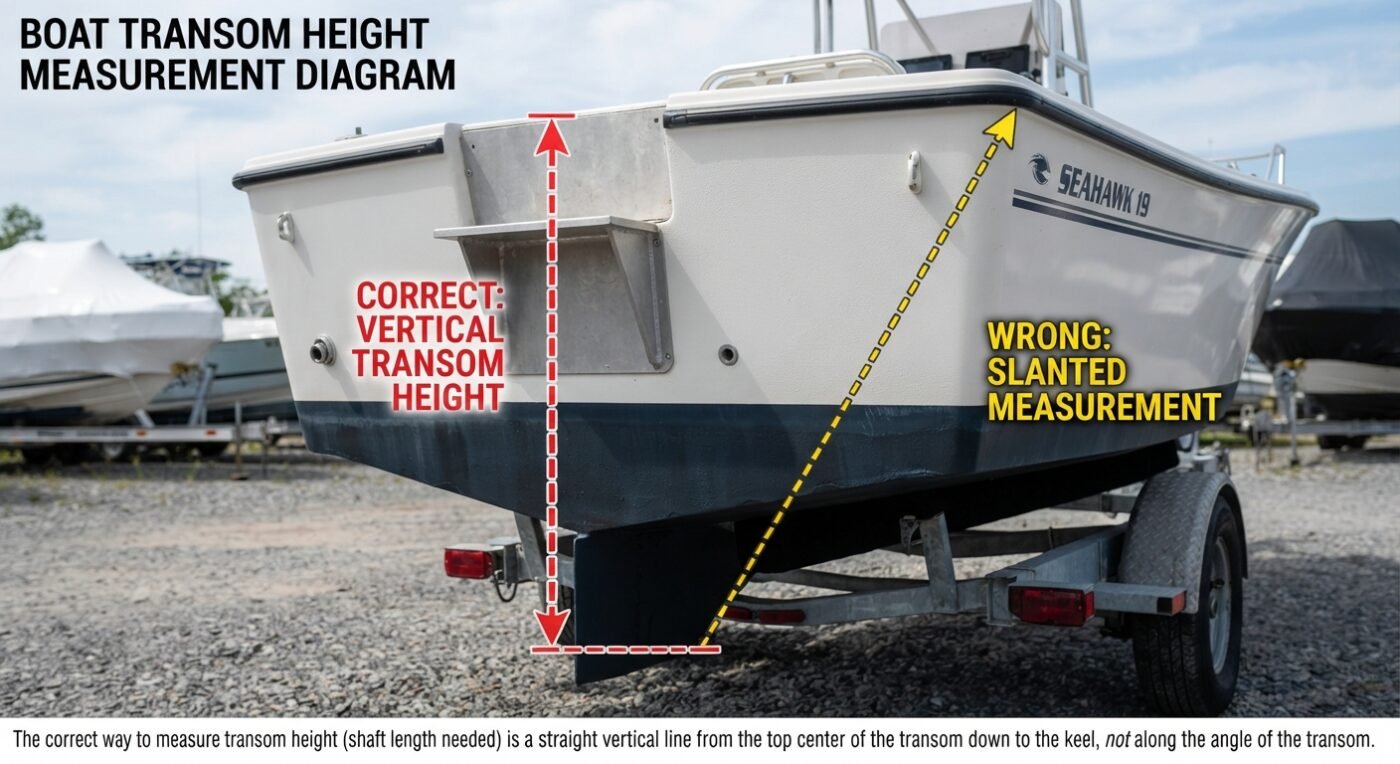
Place the top hook of your tape measure at the center of the top rim of your transom (where the outboard engine clamp bracket rests). Run the tape straight down to the lowest point of the hull bottom or keel.
CRITICAL STEP: Measure straight down in a true vertical line perpendicular to the waterline. Do NOT run the tape measure flat against the slanted face of the transom board. Measuring along the slant inflates your measurement, leading you to buy a shaft that is too long.
Step 3: Match the Number to the Chart
- If your measurement is 15 to 16 inches, you need a Short Shaft (15″).
- If your measurement is 19 to 21 inches, you need a Long Shaft (20″).
- If your measurement is 24 to 26 inches, you need an Extra-Long Shaft (25″).
Brand Specifics: Deciphering Yamaha and Suzuki Model Codes
Motor manufacturers encode shaft specifications directly into their model numbers. Knowing how to read these codes makes finding the right engine straightforward when browsing listings.
Yamaha Outboard Shaft Length Codes
Yamaha uses letter codes near the end of the model designation to indicate vertical drop:
- S = 15-inch Short Shaft
- L = 20-inch Long Shaft
- X = 25-inch Extra-Long Shaft
- U = 30-inch Ultra-Long Shaft
For example, on the Yamaha F115XB Outboard Engine , the X designates a 25-inch shaft, built for boats with a 25-inch transom drop.
Suzuki Outboard Shaft Length Codes
Suzuki lists both shaft designations and explicit metric measurements on small engines:
- S = 15-inch (381 mm) Short Shaft
- L = 20-inch (508 mm) Long Shaft
- X = 25-inch (635 mm) Extra-Long Shaft
For instance, the portable Suzuki DF5AS Outboard Motor features a 381 mm (15-inch) short shaft, ideal for tender transoms
What Happens When You Use the Wrong Shaft Length?
Engine Mounted Too High (Shaft Too Short)
- The propeller sits too close to the surface, pulling air into the blades (cavitation and ventilation).
- The cooling water pickup screen stays partially above water, causing engine overheating, water pump impeller destruction, and powerhead damage.
- The boat loses traction in chop or during hard turns.
Engine Mounted Too Low (Shaft Too Long)
- The anti-ventilation plate submerged deep below the keel creates severe hydrodynamic drag, drastically reducing top speed and fuel economy.
- Increased lever arm strain on the transom board.
- Excessive stern heavy spray and water backing up into the engine pan when slowing down abruptly.
What to Do If Your Transom Falls Between Sizes
If your transom measures 17.5 inches or 22 inches, standard shaft sizes won’t be an exact match out of the box.
- Mounting Hole Adjustments: Most outboard engines over 25 HP feature multi-hole mounting brackets that allow you to raise or lower the powerhead height by up to 1.5 to 2 inches.
- Jack Plates: An aftermarket jack plate attaches between the transom and engine, allowing you to manually or hydraulically adjust engine height and offset setback.
If you are unsure which shaft setup fits your hull, check our full selection of Outboard Engines and components or reach out to our team at Marine Gear Depot to verify your transom height against factory specs before ordering.
