Maintenance, Hardware, Outboard Motors
Best Outboard Motor for Pontoon Boats: Sizing & Repower Guide
Oct
Table of Contents
What are the Best Outboard Motor for pontoon boats?
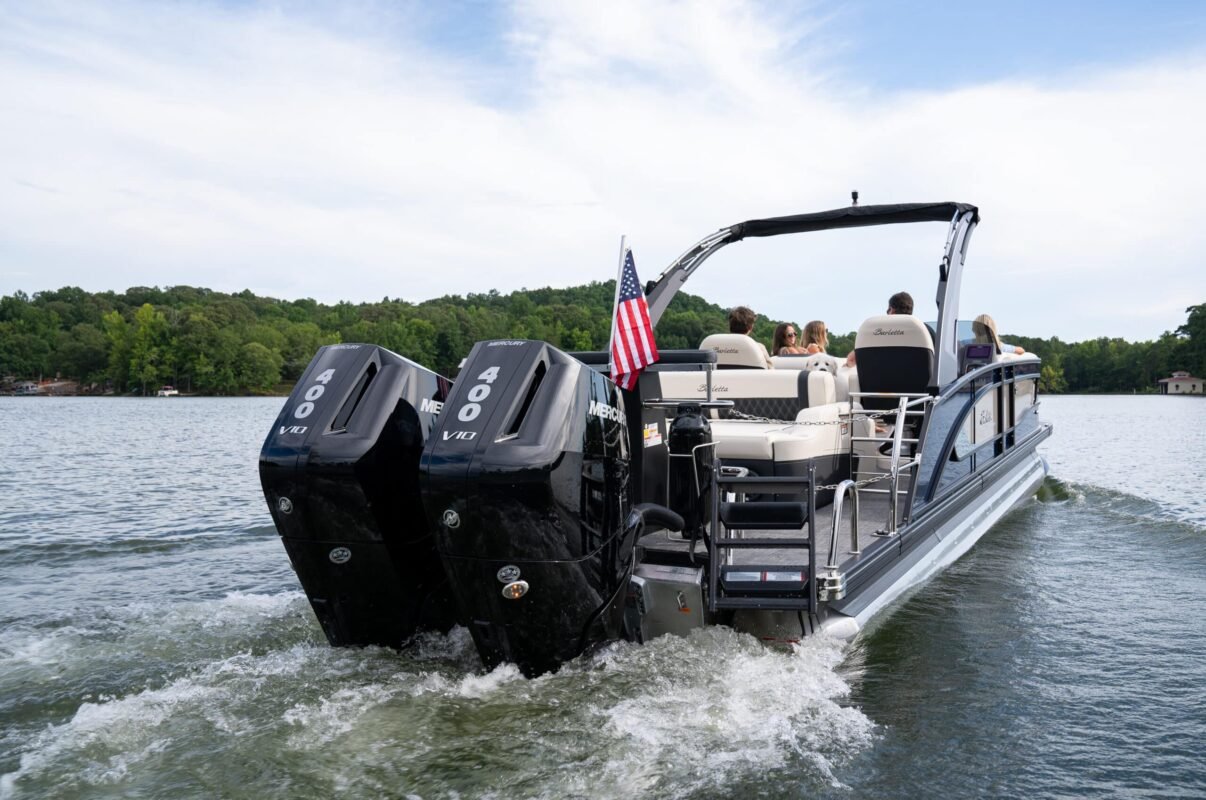
Choosing the best outboard motor for pontoon boats comes down to pontoon length, hull design (two logs versus three), passenger payload, and planned activities. Matching these variables directly to engine weight and gear displacement ensures optimal performance on the water.
If you are replacing an older 2-stroke or stepping up in horsepower, repowering involves more than just bolting a larger motor to the transom deck. You need to verify shaft length, steering cable load, charging capacity, and overall transom weight limits before making your final selection.
How Much Horsepower Do You Really Need for a Pontoon Boat?
To determine the ideal horsepower for your pontoon, first calculate your loaded displacement. Add your boat’s dry hull weight, a full tank of fuel (roughly 6 lbs per gallon), battery setups, onboard gear, and the weight of your typical passenger load.
A standard twin-log pontoon running with a light load travels easily with 25 HP to 60 HP for calm lake cruising. However, adding six adults, watersports equipment, and choppy wind forces drastically increases hull drag. Heavy two-log pontoons often squat under insufficient power, pushing water instead of riding over it.
Pontoon & Tritoon Outboard Sizing Matrix
| Boat Length | Hull Configuration | Typical Activity | Recommended HP Range | Common Shaft Length |
| 16′ – 18′ | Twin Log (2 Tubes) | Fishing, slow cruising, small lakes | 25 HP – 50 HP | 20″ (Long) |
| 18′ – 20′ | Twin Log (2 Tubes) | Family cruising, light tubing | 50 HP – 90 HP | 20″ (Long) |
| 20′ – 24′ | Twin Log (2 Tubes) | All-around cruising, medium tubing, 6+ adults | 80 HP – 115 HP | 20″ (Long) or 25″ (Extra Long) |
| 22′ – 25′ | Tritoon (3 Tubes w/ Strakes) | Watersports, heavy groups, rough water | 150 HP – 200 HP | 25″ (Extra Long) |
| 25’+ | Performance Tritoon | High-speed cruising, serious towing | 200 HP – 250 HP+ | 25″ (Extra Long) |
Tritoon vs Pontoon Outboard Engine Size
The physical differences between a traditional two-log pontoon and a three-log tritoon significantly alter how engine thrust is delivered to the water.
- Twin-Log Pontoons: Ride low in the water and lack a center running surface. Beyond approximately 115 HP, pushing additional power into a two-tube hull offers minimal speed returns and risks submerging the stern during quick acceleration or rapid deceleration.
- Tritoons: The added center log provides displacement, stability, and flotation right under the transom weight zone. Combined with lifting strakes, a tritoon lifts high on top of the water under higher speeds. This design allows you to run 150 HP to 250 HP+ outboards safely while achieving crisp turning control.
Best Outboard Motors for Pontoons by Horsepower Class
The following selections match real repower demands with engines available directly through Marine Gear Depot.
25 HP to 50 HP: Small Lakes & Fishing Pontoons
If you cruise on smaller bodies of water, navigate length or speed restrictions, or use your boat primarily as a fishing platform, this horsepower bracket delivers lightweight efficiency and smooth low-speed trolling.
Yamaha F25
- Best For: 16′ to 18′ small twin-log pontoons and tight weight budgets.
- Why It Works: Weighing around 126 lbs, the Yamaha F25 is exceptionally light for a four-stroke engine. It features battery-less Electronic Fuel Injection (EFI) for reliable cold starts and clean trolling without carbon buildup on the spark plugs.
- Considerations: Limited to low-speed cruising (10–14 mph). Not suitable for towing tubers.
- View the Yamaha F25 we stock at Marine Gear Depot
Yamaha F50
- Best For: 18′ mid-size pontoons focused on reliable lake transportation and low fuel burn.
- Why It Works: Uses a displacement-focused 996cc engine block. It drives a high-thrust gear case option that turns larger propellers, giving heavy pontoon hulls better displacement thrust when maneuvering into dock slips.
70 HP to 115 HP: The Sweet Spot for Family Cruising & Light Watersports
This class powers the vast majority of 20′ to 24′ pontoons. It provides enough muscle to pull tube riders with four to six adults onboard while keeping total transom weight under control.
Yamaha F70 & Yamaha F80
- Best For: Mid-size pontoons needing maximum power with minimal transom weight penalty.
- Why It Works: The Yamaha F70 uses a unique 16-valve single overhead camshaft design to maximize power density while remaining remarkably light (approx. 253 lbs). If your boat’s transom weight budget allows for a bit more displacement, the Yamaha F80 provides extra mid-range torque for pushing full passenger loads through heavy wind chop.
Suzuki DF-90A
- Best For: 20′ to 22′ twin-log repowers seeking strong gear drive performance and fuel efficiency.
- Why It Works: The Suzuki DF-90A incorporates an offset driveshaft that shifts the engine’s center of gravity forward over the transom bracket. It features a aggressive 2.59:1 final drive gear ratio. This lower gearing lets you swing a larger diameter pontoon prop for instantaneous hole shot when pulling kids on tubes.
Yamaha F115
- Best For: 22′ to 24′ pontoons maximizing performance on a two-log setup.
- Why It Works: The 1.8-liter DOHC four-cylinder Yamaha F115 is one of the most widely installed pontoon motors on the water. It combines incredible reliability, massive charging capacity for house electronics, and top speeds pushing 28–32 mph on properly setup hulls.
150 HP to 250 HP: High-Performance Tritoons
When operating a three-tube pontoon carrying maximum payload capacities, large displacement V6 engines are essential for keeping the hull up on plane.
Yamaha F175 & Yamaha F200
- Best For: 22′ to 25′ entry and mid-level tritoons outfitted for watersports.
- Why It Works: Built on a powerful 2.8-liter inline-four engine architecture, these outboards offer impressive power-to-weight ratios without stepping up to a heavy V6 footprint. They deliver immediate acceleration for slalom skiers and wakeboarders.
Yamaha F250
- Best For: 25’+ luxury tritoons and dual-console performance pontoon builds.
- Why It Works: Features a 4.2-liter big-bore V6 displacement block. The F250 delivers high-end top speed (45+ mph on performance tritoons) along with high-output alternators to keep dual-battery banks, high-draw stereo amplifiers, and large chartplotters fully powered all day.
View All the above Yamaha outboards at Marine Gear Depot Yamaha Brand
Key Technical Requirements for a Pontoon Repower
Before purchasing a replacement motor, perform these four essential mechanical checks:
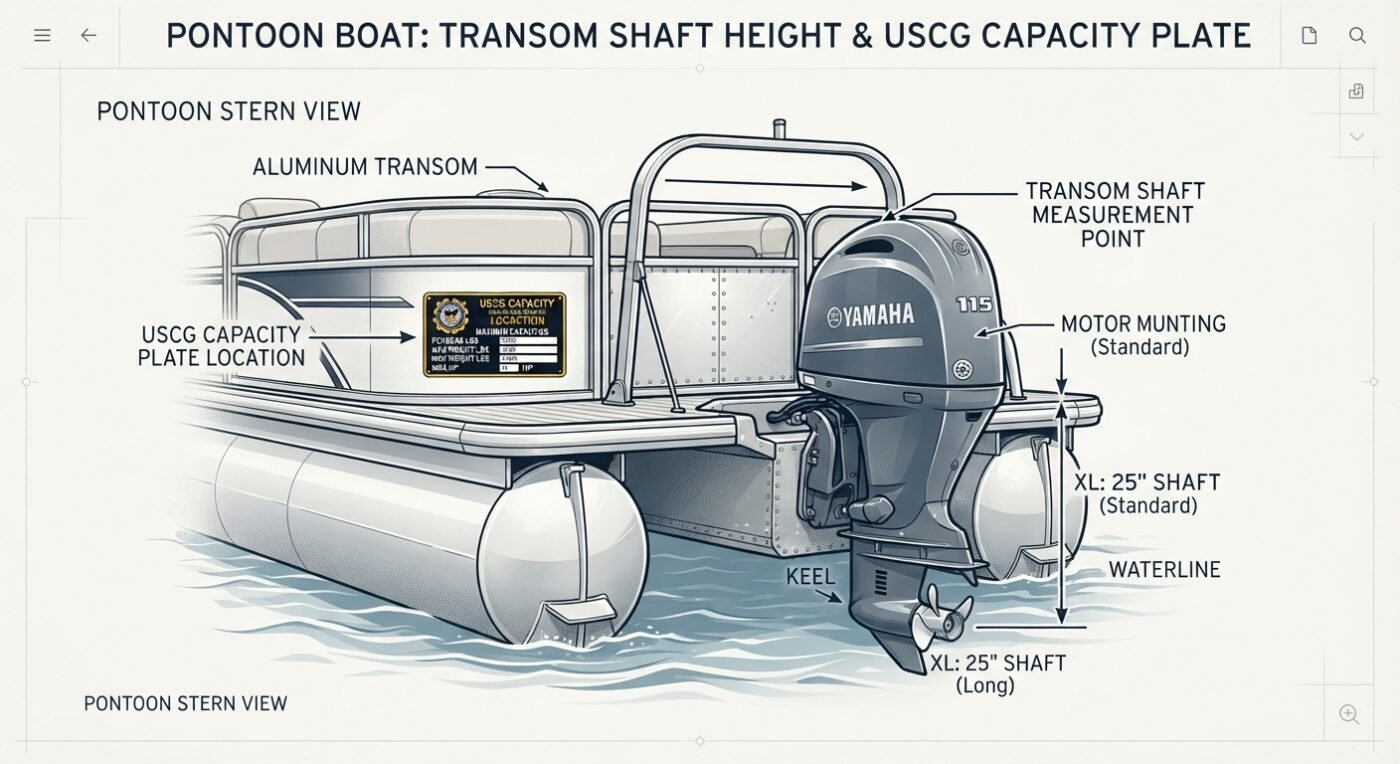
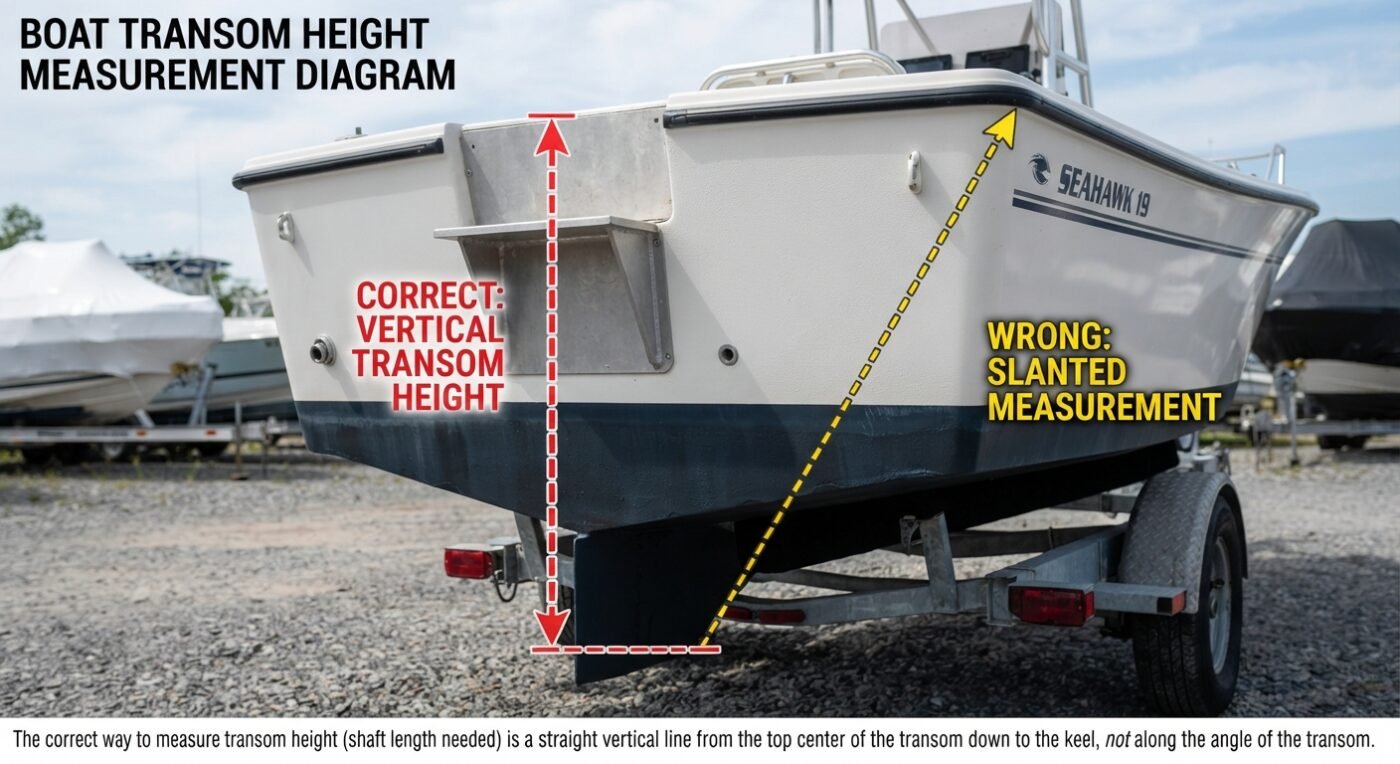
- Confirm Shaft Length Requirements (20″ vs. 25″):
- Pontoons with standard transoms mounted between the logs generally require a 20-inch (Long Shaft) motor.
- Modern tritoons, deep transom pods, and center-tube transoms often place the engine mounting board higher, requiring a 25-inch (Extra Long Shaft) motor to keep the water intake pickups fully submerged and avoid engine overheating.
- How to Measure: Measure from the top lip of your motor mounting transom board straight down to the bottom plane of the center log or water flow line.
Upgrade Mechanical Steering Cables to Hydraulic Steering:
- If your existing pontoon uses standard mechanical push-pull cables, repowering over 90 HP makes manual steering heavy and exhausting due to propeller torque feedback.
- Recommendation: Always upgrade to a hydraulic steering helm system (such as SeaStar or BayStar) when mounting 90 HP motors or higher.
Verify Alternator Output for House Battery Loads:
- Pontoons carry high electrical demands: bimini tops, depth finders, multi-speaker audio amplifiers, underwater LED lights, and livewells.
- Match your electrical draw to the outboard engine’s net charging amps. Modern 115 HP to 250 HP outboards deliver 35 to 50+ charging amps, ensuring your starter battery stays protected while anchored at the sandbar.
Select the Right Propeller Type:
- Avoid standard 3-blade speed propellers designed for narrow monohulls. Pontoons require large-diameter, large-blade-area propellers (often called Pontoon Cup or 4-Blade High-Thrust Props). These grip aerated water passing between the logs, preventing prop slip in heavy turns and reversing maneuvers.
Yamaha vs Suzuki for Pontoon Boats
Both Yamaha and Suzuki produce world-class four-stroke marine engines, but they approach pontoon repowers with slightly different engineering designs:
| Feature | Yamaha Outboards | Suzuki Outboards |
| Gearing Strategy | Standard to high-thrust options across classes; smooth mid-range cruise RPMs. | Lower drive gear ratios (e.g., 2.59:1 on DF-90A) allow larger diameter propellers for instant hole shot. |
| Engine Balance | Ergonomic inline and V-block distributions across standard transom footprints. | Offset driveshaft design moves engine mass forward over the transom bracket for reduced tail weight. |
| Maintenance Access | Easy-access oil dipsticks, top-mounted spin-on filters, and clean flushing ports. | Low-maintenance self-adjusting timing chains (no rubber timing belt replacement required). |
| Best Used For | Boaters wanting high resale value, proven dealer network support, and flexible rigging. | Boaters wanting maximum low-end torque for heavy loads combined with lower gear ratios. |
