Uncategorized
Best Small Outboard Motors (Portable, Up to 20 HP): What to Buy for Your Boat
Oct
Table of Contents
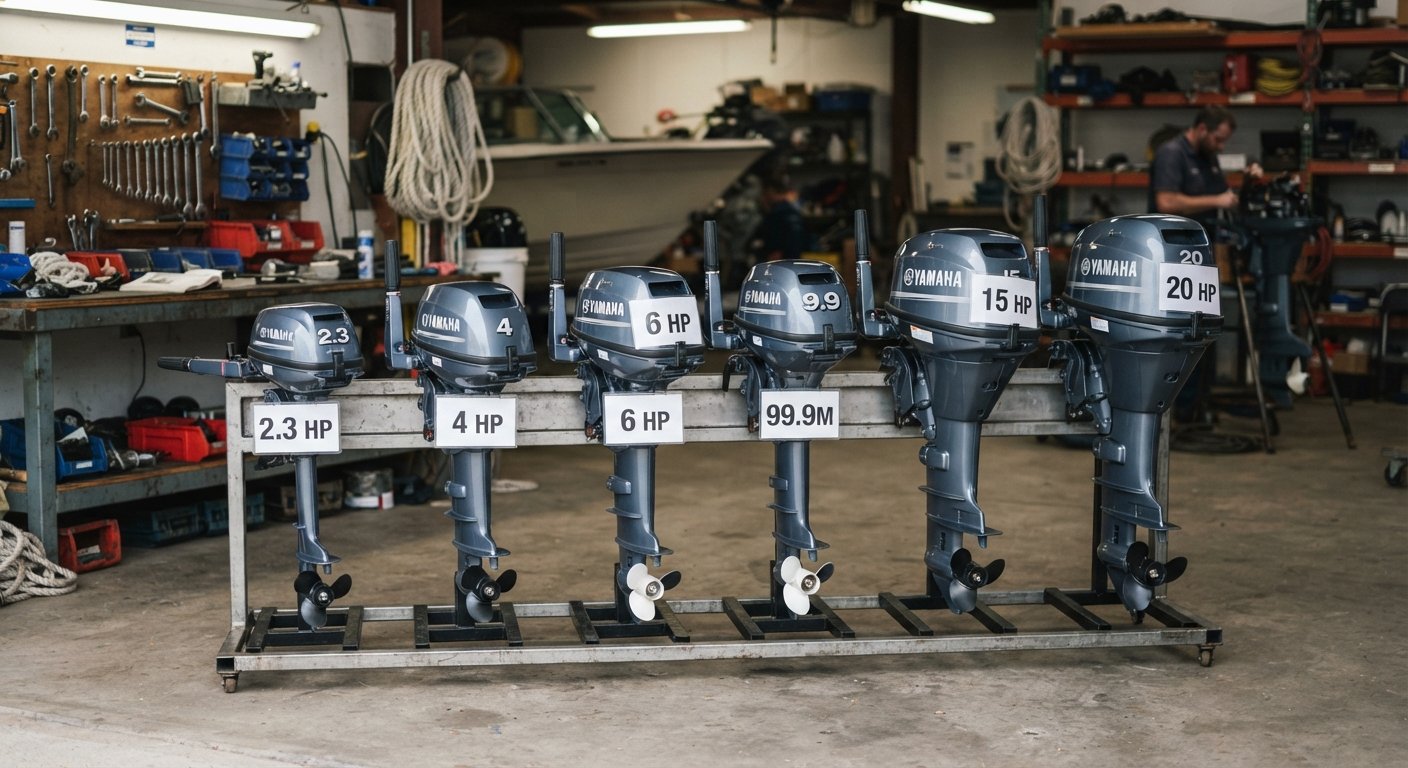
The best small outboard is the one that fits your boat’s horsepower rating, your transom height, and what you can physically lift. For a tender or inflatable that usually means 2.3 to 6 hp. For a small fishing boat it’s 9.9 to 20 hp, and for a sailboat auxiliary the team’s starting point is 8 to 9.9 hp with the right shaft length. Below, the Marine Gear Depot Service & Rigging Team explains how to choose, what each brand is like to run and service, and what we stock.
| Your boat | Starting hp range | The team’s picks |
| Tender or inflatable | 2.3 to 6 hp | Honda BF2.3, Yamaha F6, Mercury F5 |
| Small fishing or utility boat | 9.9 to 20 hp | Suzuki DF9.9B (EFI), Yamaha F9.9, Yamaha F20 |
| Sailboat auxiliary | 8 to 9.9 hp | Yamaha F9.9 (high-thrust) , Mercury F8 |
How do you choose a small outboard?
Five things decide it. Get these right and the brand is a smaller question than people expect.
What horsepower can your boat take?
Start with the boat’s capacity plate or the builder’s maximum horsepower rating, and treat it as a hard limit. Don’t buy above it because the motor was a good deal.
How much does it weigh, and can you lift it?
Weight is the factor buyers underestimate. On our listings the Honda BF2.3 is about 29.5 lbs and the Yamaha F6 about 60 lbs. The Suzuki DF9.9B is about 97 lbs, and the Yamaha F20 is about 126 lbs. Those are approximate dry weights and change with shaft length and start type.
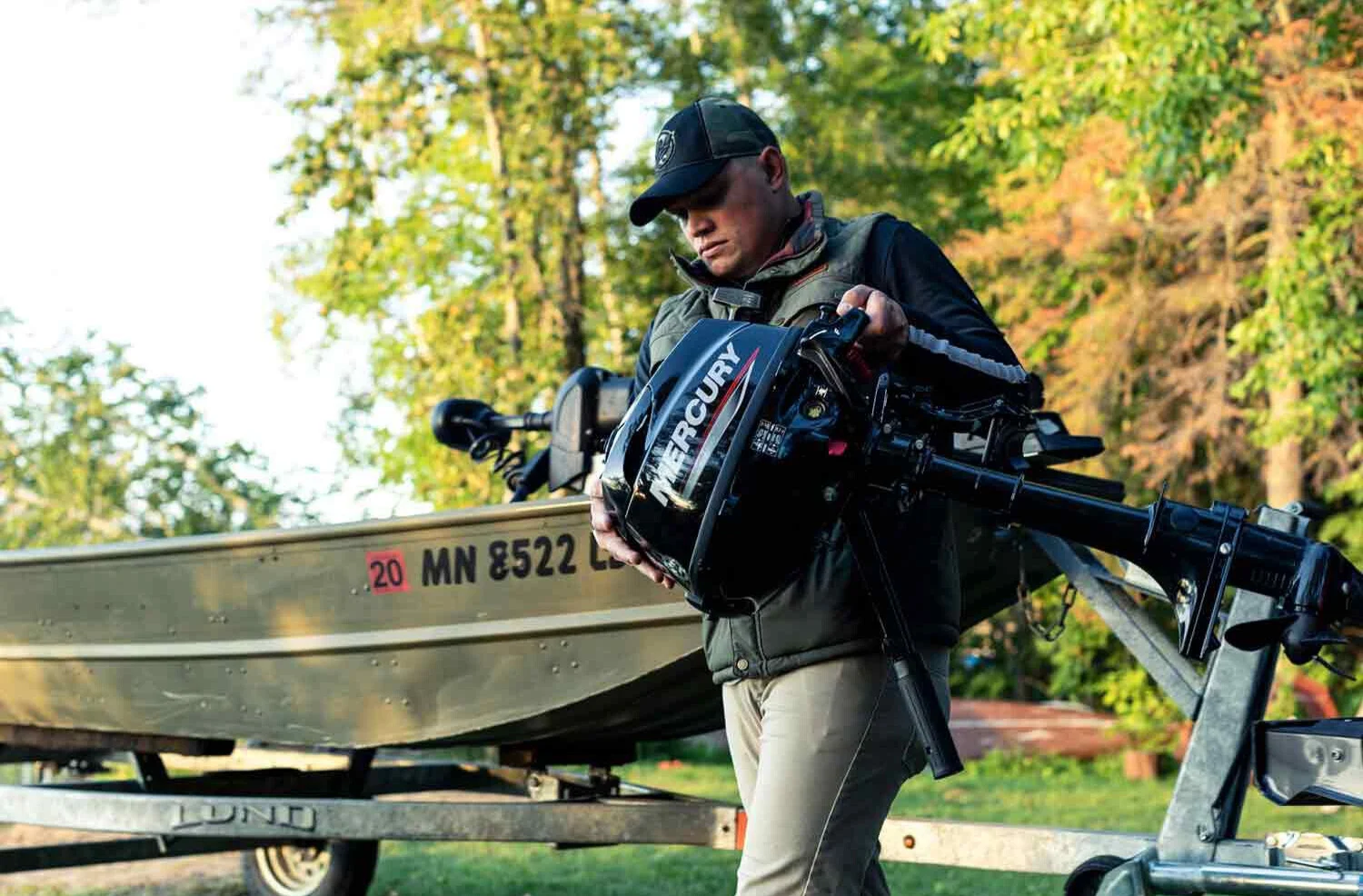
A 6 hp motor is a one-person job. A 15 or 20 hp motor usually needs two people or a hoist, so ask yourself honestly whether you’ll lift it off the transom after every trip.
Which shaft length do you need?
Shaft length is the mistake that comes up most often at our counter. Measure your transom straight down, from the top edge where the clamps sit to the bottom of the hull at the transom. Roughly 15 inches means a short shaft (S), about 20 inches a long shaft (L), and about 25 inches an extra-long shaft (XL), which is mostly a sailboat size.
A shaft that’s too short lets the propeller pull air in rough water. One that’s too long drags in the water and hurts performance. Both are avoidable with a tape measure.
Manual or electric start, and what about charging?
Manual-pull engines are simpler and lighter. Electric start adds weight and needs a battery. Charging output, where the motor has it, helps keep that battery topped up. From our listings:
| Model | Shaft | Start | Approx. dry weight | Charging |
| Honda BF2.3 | 15″ (S) / 20″ (L) | Manual | ~29.5 lbs | None (centrifugal clutch) |
| Mercury 3.5 hp (ME-F3.5M) | 15″ (S) / 20″ (L) | Manual | ~38 lbs | None |
| Yamaha F6 | 15″ (S) / 20″ (L) | Manual | ~60 lbs | 12V, 6A (optional) |
| Suzuki DF9.9B (EFI) | 15″ (S) / 20″ (L) | Manual or electric | ~97 lbs | 12V, 12A |
| Yamaha F20 (2022 model year) | 15″ (S) / 20″ (L) | Manual or electric | ~126 lbs | 12V, 16A |
How will you handle fuel?
Every portable we stock is a four-stroke, which means gasoline in the tank and engine oil in the crankcase. Check the manual for your exact model for the fuel requirement, oil grade, and the level to fill to before the first start. For ethanol-blended fuel and storage, a fuel stabilizer and ethanol treatment is cheap insurance.
What size outboard motor do you need? (Outboard motor sizing)
Sizing happens in this order. First, the boat’s rated maximum horsepower is the ceiling. Second, pick within that ceiling by what you do with the boat. Third, check that the transom or bracket can carry the weight.
How you use the boat matters because a boat that doesn’t plane works differently from one that does. A tender or sailboat is a displacement boat, so it has a speed limit set by its hull, and extra horsepower past that point mostly buys you a heavier motor and more fuel burn. A light fishing boat that planes is where extra horsepower turns into real speed, but only up to its rating.
For sailboats, the rules of thumb don’t agree. One sailing guide uses about 1 hp per 550 lb of displacement. Some dealers quote 1 hp per 500 lb. On an 8,000 lb boat that’s roughly 14.5 hp against 16 hp, which is a spread large enough to change which motor you buy. Use them as a starting point, then weigh how often you’ll motor, in what current and wind, and what the transom bracket can handle. Look at your boat first, not the formula.
Best small outboard for a dinghy or tender (about 2.3 to 6 hp)
You don’t need to plane a tender. You need to get to shore, carry the motor without a fight, and stow it. Weight matters most here.
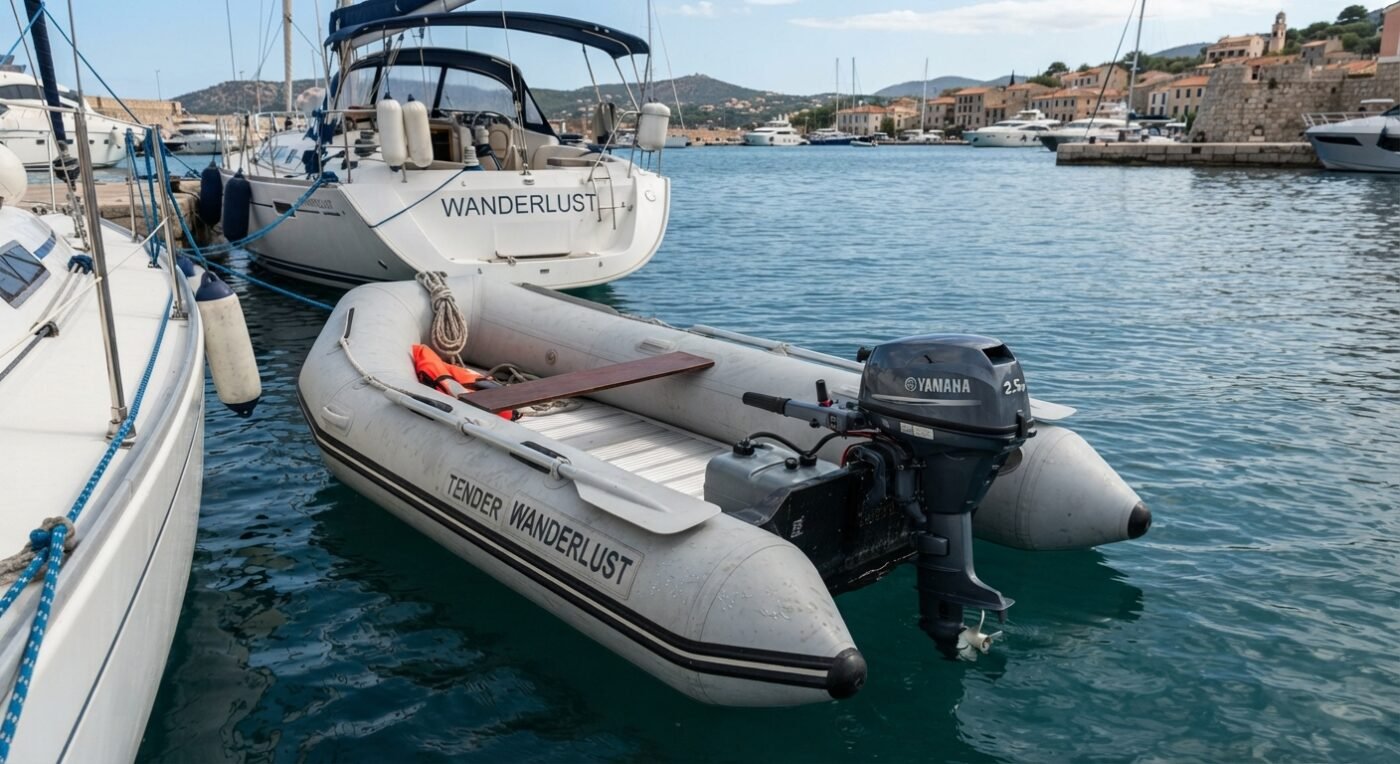
The Honda BF2.3 (about 29.5 lbs) is the team’s pick for small tenders and inflatables. It’s air-cooled, so there’s no water pump impeller to damage in shallow, muddy water. It also has a centrifugal clutch instead of a gearshift, so to go astern you turn the whole motor around. It’s louder than the bigger Hondas.
Step up to the Yamaha F6 (about 60 lbs) or Mercury F5 for a bigger inflatable, or when you want more push against wind and current. The Mercury 3.5 hp is the lighter-duty option for small boats that don’t need much. The F6 is the heaviest of these, so check you can lift it.
Best small outboard for a small fishing boat (about 9.9 to 20 hp)
This is where a motor has to do real work: push a loaded boat, run against current, or serve as a kicker. The Suzuki DF9.9B (EFI) is the team’s pick when easy starting matters. The Yamaha F9.9 is a dependable all-rounder, and the Mercury F9.9 is a common kicker choice for fishing boats.
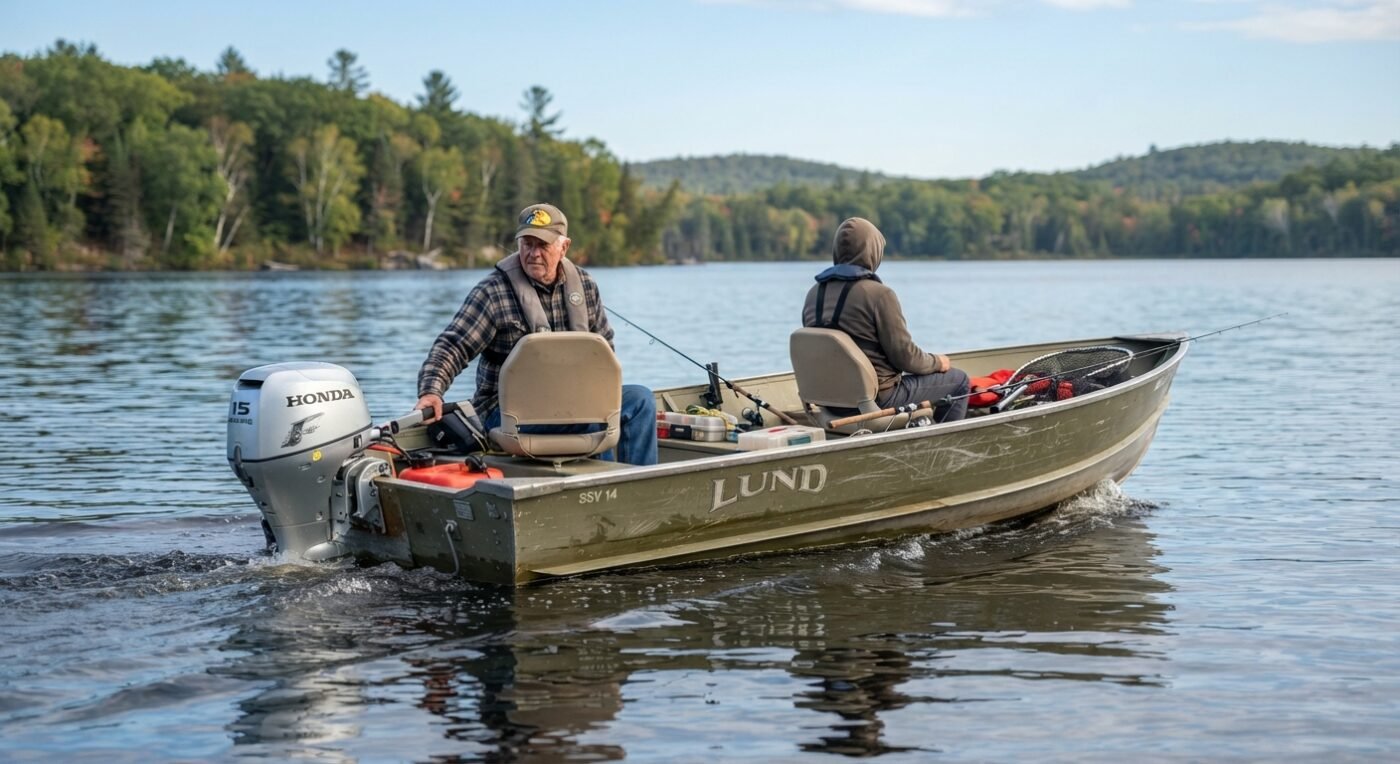
At 20 hp, the Honda BF20, Mercury F20 and Yamaha F20 are strong options for aluminum boats and skiffs that need more speed. They’re heavy, though. Our Yamaha F20 listing shows about 126 lbs, so plan on a hoist or two people. We also have a 2022 model-year Yamaha F20, new and never run.
Before buying at the top of the range, confirm your boat is rated for it. See the sizing section above.
Best small outboard for a sailboat auxiliary
On a sailboat you want steady low-speed push and enough reach that the propeller stays in the water when the stern lifts. The team’s picks are the Yamaha F9.9 in its high-thrust version and the Mercury F8.
Two things change the choice here. The first is shaft length: many sailboat transoms and brackets need a long (20″) or extra-long (25″) shaft, so measure your bracket. The second is weight. A heavy motor on a transom bracket or in a well puts real load on the boat, so check what the bracket and transom are built to carry before you commit.
What are the brands like to run and service?
These notes come from the Service & Rigging Team at Marine Gear Depot. Where they depend on a spec or a procedure, we’ve pointed you to the manual.
Honda (BF2.3 to BF20)
Honda is the one the team calls the easiest to live with. The BF8 to BF20 are water-cooled and among the smoother, quieter twins in this range, in the team’s view. Parts such as filters, impellers and carburetor kits are widely available. The weak spot is the small carburetors on the BF2.3 and BF6: their jets are tiny, so untreated ethanol fuel left sitting in them can clog them. Use stabilized fuel and follow the manual’s storage steps.
Suzuki (DF5 to DF15)
Suzuki’s strength is power for the weight, and the team points to the fuel-injected DF9.9B and DF15 for easy starting. Parts availability is good. If you run in salt or brackish water, keep up with anode checks on the schedule in the manual.
Mercury (F5, F8, F9.9, F20, 3.5 hp)
Mercury’s tiller handle puts controls where you can reach them one-handed, which suits small-boat maneuvering. The team also values how easy it is to find Mercury parts and consumables at local shops. One thing to watch on the 3.5 to 5 hp models with built-in fuel tanks: if the cap vent stays closed while running, fuel flow can starve and the engine will stumble or die. Open the vent before starting.
Yamaha (F4, F6, F9.9, F20)
The team finds Yamaha smooth and low in vibration, and says Yamaha motors tend to hold their resale value well. The trade-off is that OEM parts usually cost more than other brands, so price a spare impeller and filters before you buy. One service issue the team sees is a thermostat sticking open, which lets the engine run cold and can thin the oil with fuel. Flushing after saltwater use helps keep the cooling system clear.
Whatever brand you buy, flush after salt use and follow the maintenance schedule in the manual.
What are the common mistakes with small outboards?
- Wrong shaft length. The most common one, and the cheapest to avoid. Measure the transom as described above.
- Too much horsepower and too much weight. A 15 to 20 hp motor is heavy to lift. If it won’t stay on the boat between trips, a smaller motor may serve you better.
- Old or untreated fuel. Small carburetors clog when ethanol fuel sits. Treat the fuel and follow your manual’s storage steps.
- Laying a four-stroke on the wrong side. Oil can drain into the cylinder head or air filter. Rest the motor the way your manual says.
- Skipping the break-in. A new engine’s first hours matter. Follow the break-in schedule in your manual instead of running wide open from the start.
When should you not buy a gas outboard?
Skip the 15 to 20 hp class if you’ll be lifting the motor on and off the boat by yourself. Skip the 2.3 if your boat is heavily loaded or you’re pushing against current. If you don’t want to carry fuel at all, look at electric. Electric motors are quiet and cut out the carburetor, oil and impeller chores, but range depends on the battery, and the battery adds its own weight. See our guide to electric engines vs gas outboards.
What do we stock from 2.3 to 20 hp?
| HP | Honda | Suzuki | Mercury | Yamaha |
|---|---|---|---|---|
| 2.3 | BF2.3 | |||
| 3.5 | ME-F3.5M | |||
| 4 | F4 | |||
| 5 | DF5 | F5 | ||
| 6 | BF6 | DF6 | F6 | |
| 8 | BF8 | F8 | ||
| 9.9 / 10 | BF10 | DF9.9 | F9.9 | F9.9 |
| 15 | BF15 | DF15 | ||
| 20 | BF20 | F20 | F20 (2022 model year) |
Start with your boat’s horsepower rating and transom measurement, then open the brand collection that matches your pick (Honda, Suzuki, Mercury or Yamaha) and filter to your shaft length. If you’re also weighing engine oil for a four-stroke, see [LINK: four-stroke outboard engine oil. This guide stops at 20 hp; if you’re comparing the best outboard motor options for bigger boats, that’s a separate decision.

Pingback: Best outboard brands: Yamaha vs Mercury vs Suzuki vs Honda - Best Marine Gear Depot 2026