
Maintenance, Engine Oil, How-To, Outboard Motors
Outboard Oil Change: How to Change the Oil in a 4-Stroke Outboard
Oct
Table of Contents
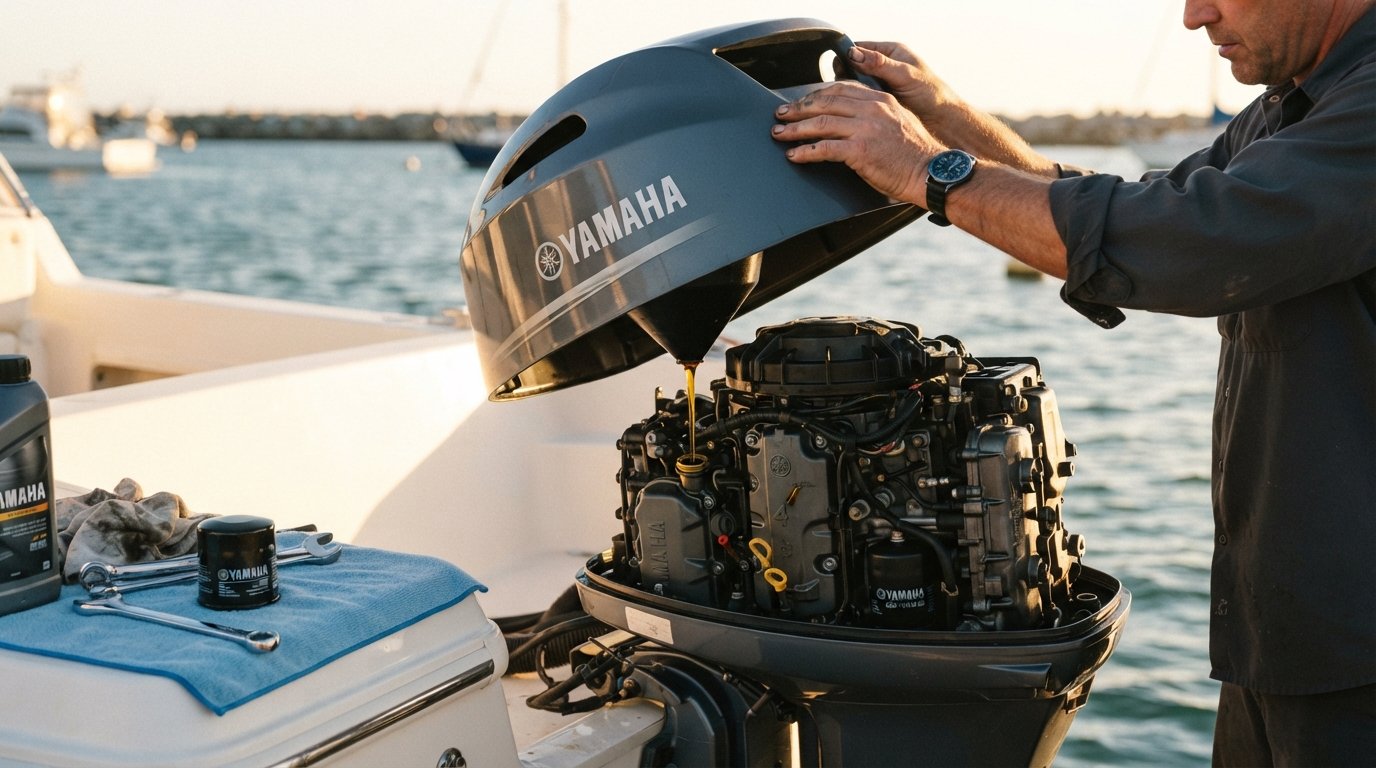
An outboard oil change is a drain, a new filter, a refill and a level check. The part that trips people up is the method, because some engines have a drain plug and some only let you pump the oil out through the dipstick tube. Check which yours is first, then follow your owner’s manual for the exact oil grade, capacity and tightening specs. This guide covers the order of the job and the mistakes we see most.
Plan on about an hour the first time
First, find out how your outboard drains
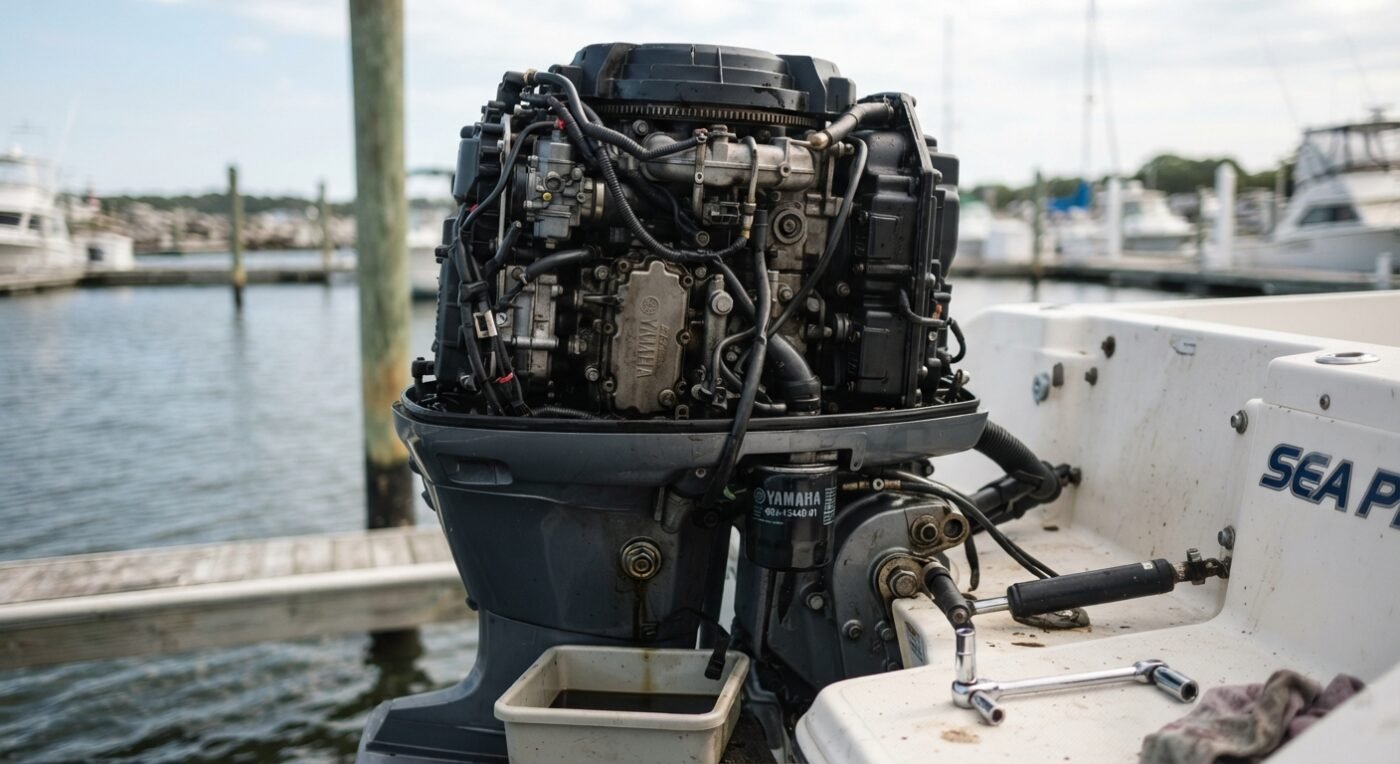
Open the manual and look up “engine oil”. You’ll find one of two setups.
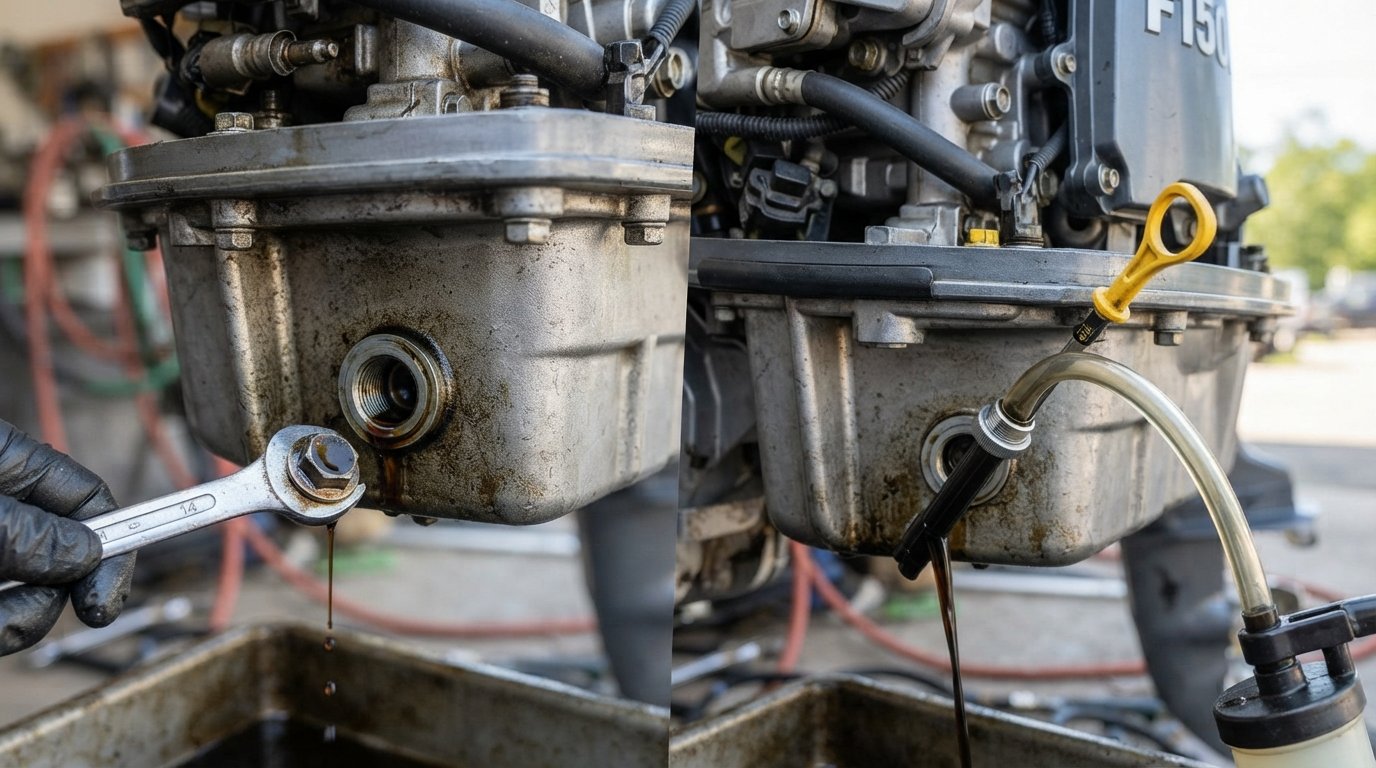
- Drain plug or screw on the sump. You tilt the engine to the position the manual specifies, put a pan under the plug and let it drain. Many larger engines work this way.
- Pump through the dipstick tube. There’s no usable drain, so you pull the oil out with an extractor pump. BoatUS calls this the preferred method for four-stroke outboards, while another BoatUS piece says a drain plug gets the oil out most completely where one exists. Those two sources disagree, so go with whatever your manual says.
Either way, you still replace the filter.
What you need
- Marine 4-stroke oil in the grade and amount your manual lists
- A new oil filter for your exact engine, and a new crush washer or O-ring for the drain plug
- Drain pan, funnel, rags, oil filter wrench, socket for the drain plug
- An extractor pump if your engine has no drain
- A way to run the engine with water supplied: a flusher/ear muffs on the hose, or the boat in the water
- A container for the old oil and old filter
Our outboard and Z-drive flusher
Which oil to use
Use oil made for marine 4-strokes and match the grade to your manual. Look for the NMMA FC-W rating on the label, which marks oil formulated for the wet, humid conditions outboards run in. Regular car oil is the shortcut many owners take to save a few dollars, and it isn’t built for that environment.
Our Liqui Moly Marine 4T 10W-30 is a fit if your manual lists 10W-30. If it calls for something else, buy what the manual says.
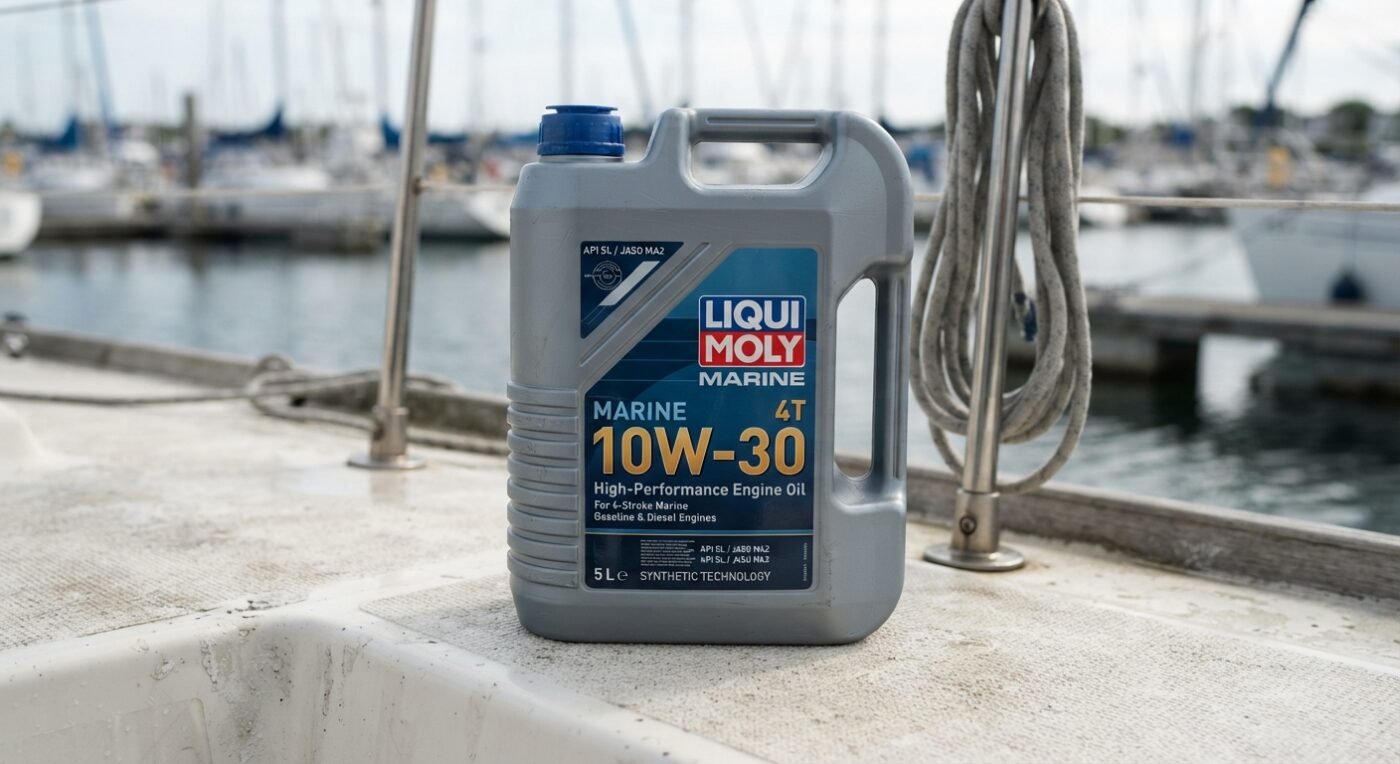
Liqui Moly Marine 4T 10W-30 (5 L)
How to change the oil, step by step
- Warm the engine for a few minutes. Warm oil flows better and carries more debris out with it. Run it on a flusher or in the water. Never run an outboard dry.
- Shut it off and position it. Take the kill-switch lanyard off. Tilt the engine as your manual says. Sources disagree here (running position vs. trailering position), so don’t copy someone else’s.
- Drain the oil. Pan under the plug, plug out, let it run until it stops to a drip. On a pump-only engine, feed the pump hose down the dipstick tube and pull the oil out.
- Check the plug and washer. Replace the crush washer or O-ring. Reuse it and you risk a slow leak.
- Refit the plug and tighten to the manual’s torque, no more.
- Change the filter. Spin it off with the wrench, with a rag underneath. Wipe the mounting face. Rub a thin film of fresh oil on the new filter’s gasket, not grease. Screw it on until the gasket touches, then tighten as the manual says.
- Refill in stages. Pour in less than the listed capacity, wait a moment, then check the dipstick and top up. Don’t pour the full number in and assume you’re done.
- Check the dipstick correctly. Some engines read right only with the cap resting in the hole, not screwed in. Honda’s guidance for its small 4-strokes says exactly this, so check yours.
- Run it and recheck. Start it, look for leaks at the plug and filter, shut off, wait a few minutes and check the level again.
Tip: write the date and engine hours on the new filter so the next change is easy to time.
What the old oil is telling you
Look at the oil while it drains. Rub a little between your fingers. This is what The Marine Gear Depot Service & Parts Team sees most when they crack open a drain plug:
| What you see | What it usually means | What to do |
|---|---|---|
| Milky, coffee-colored oil | Water getting in, from a bad seal or a cooling-system fault such as a stuck thermostat | Don’t just refill and go. Have the engine inspected before it runs again. |
| Strong gasoline smell | Fuel getting past the rings into the crankcase, often after long periods of trolling | Check the level for a rise between changes and have it looked at if it keeps happening. |
| Silver or glittery sheen | Metal wearing inside the engine | Stop running it and take it to a shop. |
| Thick, pitch-black sludge | A skipped or overdue service | Change it now and set a schedule. If it’s heavy, ask a shop to look. |
Mistakes that cost engines
Using automotive oil. Marine engines run hard and in damp air. Marine oil is formulated for that, and car oil isn’t. Match the manual and look for FC-W.
Overfilling. Pouring in the full listed amount and not checking the dipstick is the classic. Too much oil can foam and aerate. It can also hide a real problem, because an engine that “makes oil” (fuel leaking past the rings into the crankcase) shows up as a rising level. If the dipstick reads higher than the last change, find out why.
Reusing the drain plug washer. An old crush washer or O-ring leaks slowly, and a dropped one can end up in the pan unnoticed. Replace it every time.
Forgetting the lower unit. A 4-stroke has two separate lubricant systems, the engine oil and the gear oil in the lower unit. Changing one doesn’t touch the other. Skip the gearcase and you risk gear damage.
Filling the gearcase from the top hole. Gear lube goes in from the bottom hole and up, until it comes out of the top vent hole. Pouring it down the top with a funnel traps air and gives you a false full.
What about the lower unit?
It’s a separate job with its own oil, so don’t mix it up with the engine oil you just changed. The short version: drain it, look for water (milky means a seal problem), replace both screw washers, and pump new gear lube in from the bottom until it comes out the top. Grade and quantity come from your manual. Tohatsu publishes its lower unit procedure and quantities if you want a worked example. Tohatsu lower unit oil change procedure
How often?
Follow the interval in your manual, which is set by hours or time, whichever comes first. If an engine sits all season, change it before storage so old oil isn’t sitting in the crankcase. That’s covered in our winterizing guide here How to winterize a 4-stroke outboard
What to do next
Get your manual open to the engine oil page and confirm the grade, capacity and drain type. If it calls for 10W-30, our Liqui Moly Marine 4T 10W-30 covers it. For filters, washers and gear oil, check your engine’s part numbers first. engine oil and engine products
3. FAQ
Can I use car oil in my outboard?
Use marine 4-stroke oil that meets your manual’s spec. Marine oil is formulated for wet, high-load running, and NMMA FC-W is the rating to look for. Check your manual before trying anything else.
Do I have to change the filter every time?
Yes. A new filter with fresh oil is standard practice for 4-stroke outboards, and BoatUS says the same.
How much oil does my outboard take?
It depends on the engine, so the manual gives the figure. Add less than that first, check the dipstick, then top up.
Can I change the oil with the boat in the water?
You can, but spills in the water can bring a heavy fine, so it’s much easier on a trailer or a stand. If you do it afloat, use an extractor pump and have absorbent pads ready. Also check what your marina or boatyard allows.
What does milky oil mean?
Water is getting into the oil. Don’t refill and carry on. Find the source before it runs again.
Outboard Oil Change
