Maintenance, Engine, Fuel System
Marine Fuel Additives: What They Do and When to Use One
Oct
Marine fuel additives are small doses of chemistry you add to the tank to deal with one specific problem: fuel going stale, ethanol pulling in water, or deposits building up in the fuel system. Most boats don’t need one every trip. If you run the boat every week on fresh, ethanol-free fuel, you can skip them. If it sits for more than about three weeks, or you fill up with standard E10 pump gas, you should treat the tank. And everyone needs one for winter storage. That’s the shop view of The Marine Gear Depot Service & Parts Team, and the rest of this guide explains why.
The catch is that “fuel additive” covers several different products that do different jobs. Buying the wrong one is the most common mistake.
What marine fuel additives actually do
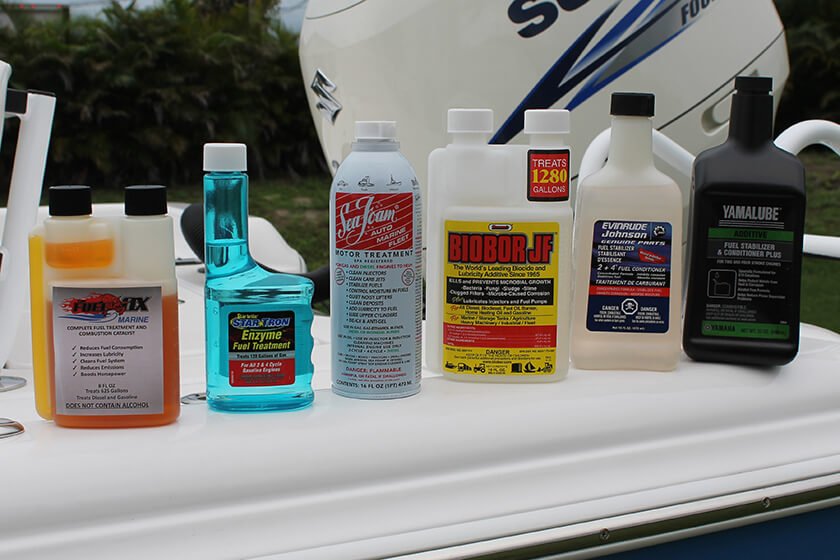
Gasoline in a boat has a harder life than gasoline in a car. It sits for weeks, it’s stored in a vented tank in damp air, and most pump gas now contains ethanol, which attracts water. An additive tackles one of these problems. It doesn’t fix a bad fuel system.
There are four jobs worth knowing about:
| The problem | The additive type | What it won’t do |
|---|---|---|
| Fuel going stale while the boat sits | Stabilizer | Restore fuel that has already gone bad |
| Ethanol fuel absorbing water | Ethanol treatment (often built into a marine stabilizer) | Remove a large amount of water that’s already in the tank |
| Light varnish and deposits in carburetors or injectors | Fuel system cleaner | Clear heavy, hardened gum |
| Engine knock or pinging | Anti-knock / octane additive | Fix a mechanical fault |
Why ethanol is the reason most people buy one
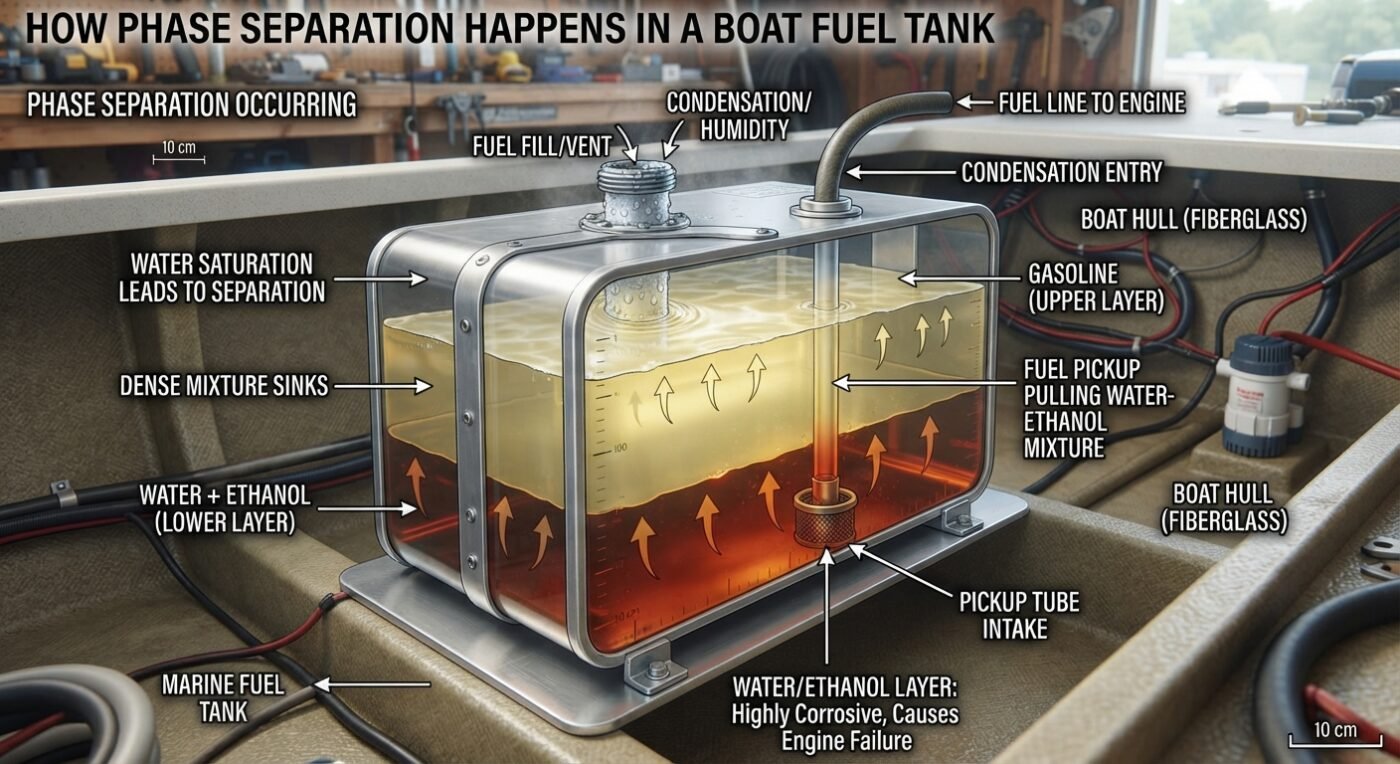
Ethanol blended into pump gas absorbs water from the air. Left long enough, the water and ethanol can separate from the gasoline and settle at the bottom of the tank. That’s phase separation, and the bottom of the tank is where the fuel pickup draws from. Additives aimed at this problem work in one of two ways: some disperse tiny water droplets so they stay in suspension and pass through the engine, and others make the water drop out so a fuel filter or water separator can catch it.
Check your engine manual for the maximum ethanol blend it allows before you assume E10 is fine.
Our service team’s view: regular use of a good stabilizer with ethanol protection would have prevented the phase separation (water sitting at the bottom of the tank) and the light varnish they see on engines that sit between trips.
When you need an additive
- The boat sits for more than about three weeks at a time. Fuel in the tank ages whether you use it or not.
- You can only buy standard E10. Treat every tank, not just the ones before storage.
- Winter layup. Every boat that sits for the season should go into storage with treated fuel.
- The engine has started to run rough after sitting. An additive can help with light varnish, but see the next section.
When you don’t
- You run the boat every week and buy fresh, ethanol-free fuel. The fuel doesn’t sit long enough to go bad, so a routine additive doesn’t give you much.
- Your manual says not to use them. Some engine makers have their own position. Read it first.
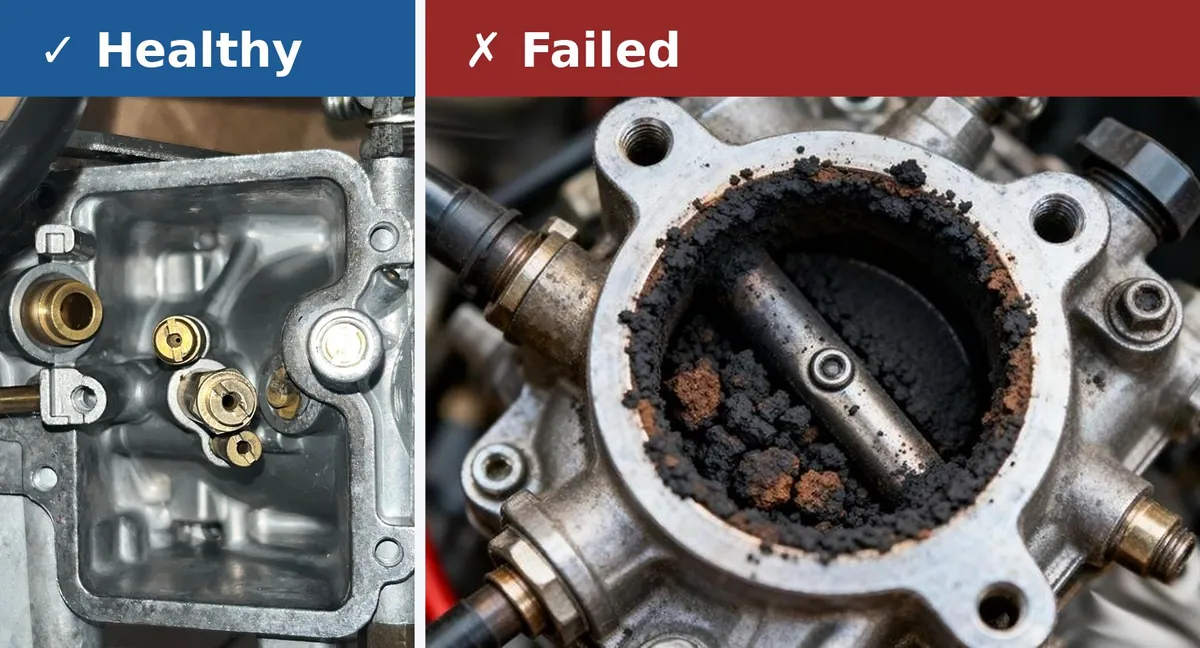
- The problem is already big. Here’s what the shop sees where an additive wouldn’t have helped: heavy, green gummed-up carburetors, and tanks full of water from a leaking deck fill cap. Once the gas has turned to shellac, or the tank is partly full of lake water, an additive won’t save you. That needs a carburetor teardown and a tank pump-out. If water keeps getting in, fix the cap seal first.
What to check before you buy
- Your manual. Fuel recommendations and the maximum ethanol blend.
- The job. Storage, ethanol, cleaning or knock. One bottle rarely covers all four.
- The label’s treat ratio. Every product gives a mix ratio per gallon. Use it. More is not better.
- Marine use. The label should say it’s suitable for marine engines.
- Your engine type. Four-stroke and two-stroke owners should read the next point.
Two-stroke owners: an additive is fine in a two-stroke, but it does not replace your two-stroke mixing oil. Keep mixing the oil as your manual says, and don’t over-saturate the fuel mix with additive on top of it.
Where BENZIN Plus fits
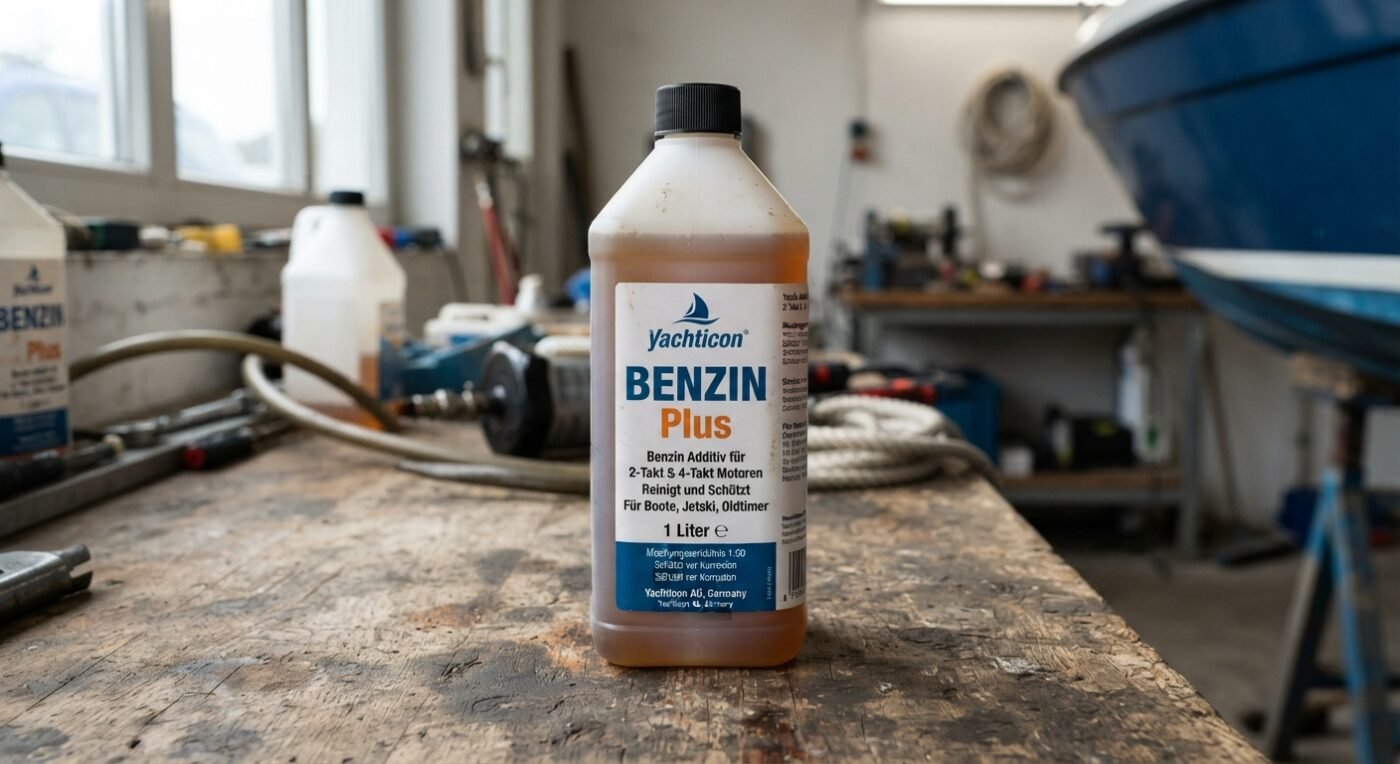
Our BENZIN Plus by Yachticon is a gasoline additive. According to its label, it’s designed to help keep deposits from building up in the carburetor, valves, injectors and combustion chamber, and to reduce pinging. Customers buy it to deal with ethanol-related problems and to keep the fuel system clean.
The question we hear most is whether you can just leave it in the tank all winter or whether you need a separate stabilizer. BENZIN Plus isn’t sold as a stabilizer, so for storage, use a dedicated marine stabilizer with ethanol protection. It’s a good fit for the cleaning job. For winter, look for a stabilizer.
What to look for in a stabilizer for winter storage
We don’t link a product here yet, so here’s how to pick one. Look for:
- A label that says it’s for marine use
- Ethanol protection stated on the label
- A clear treat ratio per gallon of fuel
- A storage claim on the label (use the label’s numbers, not a forum’s)
Add it before you fill up or to a tank of fresh fuel, then run the engine so the treated fuel reaches the whole fuel system, as the label directs. The full layup steps are in our winterizing guide how to winterize a 4-stroke outboard
Does diesel work the same way?
No, and it’s worth keeping separate. This post is about gasoline. Diesel has its own problems: algae and bacterial growth in the tank, and gelling in cold weather. Those call for different additives, mainly biocides, not the gasoline products above. Don’t treat a diesel tank with a gasoline additive.
The short version
If you run it weekly on fresh ethanol-free fuel, skip the additive. If it sits for three weeks or more, or you run E10, treat the tank. For winter, use a stabilizer. If the engine is already sputtering with gummed carburetors or water in the tank, the fix is a service, not a bottle. Visit engine products and maintenance chemicals
FAQ
Can I leave BENZIN Plus in the tank all winter, or do I need a separate stabilizer?
BENZIN Plus isn’t sold as a stabilizer, so for winter storage use a dedicated marine stabilizer with ethanol protection.
Will an additive fix an engine that’s already sputtering?
It can help with light varnish. It won’t fix heavy gummed carburetors or a tank with a lot of water in it. Those need a teardown and a pump-out.
Do I need an additive if I use ethanol-free fuel?
Not for routine use if you run the boat every week on fresh fuel. If it sits for long periods or goes into winter storage, you still want a stabilizer.
Does an additive replace two-stroke mixing oil?
No. Keep mixing the oil as your manual says, and don’t overdo the additive.
Can I mix different additives?
Follow each label, and don’t stack products that do the same job. If you’re unsure, ask the manufacturer.
Table of Contents
